
Dental implants and full mouth rebuilds
An implant is a small titanium root placed into the jaw bone. Once the bone grows around it, a crown goes on top. It does not slip, it does not come out at night, and it does not need the neighbouring teeth to be filed down.
When there is not much bone left
Bone needs a tooth root to keep it stimulated. Once a tooth has been missing for a few years the bone underneath quietly shrinks, which is why long term denture wearers are often told implants are impossible.
They are frequently not impossible. A zygomatic implant is longer and anchors into the cheekbone, which does not shrink. A pterygoid implant reaches solid bone at the back of the upper jaw. Both let us skip or reduce the grafting stage, and both are placed here.
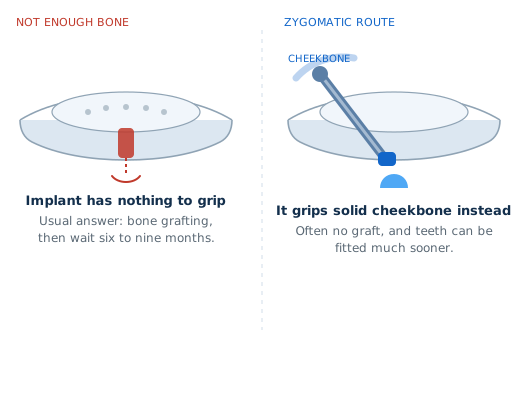
Why a longer implant solves a problem that a shorter one cannot.
Standard implants
- Single tooth replacement
- Bridges supported by implants
- Titanium, well tested and body friendly
Zygomatic and pterygoid
- Zygomatic implants into the cheekbone
- Pterygoid implants at the back
- Trans nasal implants in selected cases
- Often avoids long grafting delays
Full mouth rehabilitation
- Fixed teeth, not removable
- Immediate loading in suitable cases
- Implant supported dentures as a lower cost option
Bone grafting and sinus lift
- Bone grafting
- Sinus lift procedures
- Pre prosthetic surgery to shape the ridge
Planning and scanning
- CT based planning
- Patient specific implants where needed
- Written plan and cost before you commit
Aftercare
- Cleaning technique taught properly
- Review appointments built in
- Direct line if something feels wrong
the cost of repeating one, and it lets Dr Pathak give you a straight answer on the first visit.
Face and jaw surgery
This is the part of the practice that other clinics refer into. It covers injury, deformity, disease and the surgical problems that a general dentist is not trained for.
Facial injuries
- Facial, skull and orbital fractures
- Craniomaxillofacial reconstruction
- Cuts and soft tissue wounds on the face
- Severe facial infections
Corrective jaw surgery
- Orthognathic surgery for bite and profile
- Facial asymmetry correction
- Cleft lip and palate surgery
- Planned alongside your orthodontist
Oral cancer and lesions
- Diagnosis and surgery for oral cancer
- Precancerous patches and lesions
- Cysts and tumours of the jaw
- Salivary gland problems
- Biopsy with laboratory correlation
Minor oral surgery
- Impacted and buried wisdom teeth
- Tongue tie release in children and adults
- Frenectomy and frenoplasty
- Alveoloplasty to smooth the ridge
Anaesthesia options
- Local anaesthetic given time to work
- Sedation for anxious patients
- General anaesthetic for major surgery
Second opinions
- Bring reports and scans
- Honest view, including agreeing with the first plan
- No pressure to switch
Jaw joint problems and facial pain
Pain in the face is often blamed on teeth when the cause is somewhere else entirely. The jaw joint, the nerves and the muscles all deserve examining before anything gets drilled.
Jaw joint disorders
- Examination of the joint itself
- Bite and muscle assessment
- Splints, physiotherapy and medication
- Surgery only where genuinely needed
Facial pain and neuralgia
- Trigeminal neuralgia assessment
- Orofacial pain diagnosis
- Referral where a neurologist is needed
Sleep apnoea
- Airway assessment
- Surgical options where suitable
- Joint care with sleep physicians
General, children's and older adults' dentistry
The routine work that keeps you out of the surgical chair. Same clinic, same sterilisation, same unhurried appointments.
When there is not much bone left
The hard white enamel on the outside has no nerves in it, so early decay does not hurt. Under it sits softer dentine, and in the middle a living nerve.
Once decay passes the enamel it moves quickly, and once it reaches the nerve a simple filling is no longer enough. That is the whole reason six monthly check ups exist: a problem caught in the outer layer costs very little to fix.
A problem caught in the outer enamel costs very little to fix. Left alone it reaches the nerve.
General dentistry
- Routine check ups and preventive advice
- Scaling and polishing
- Tooth coloured fillings
- Treatment for sensitive teeth
Root canal treatment
- Root canal treatment
- Crowns to protect the tooth afterwards
- Retreatment of failed root canals
Whitening and smile work
- In clinic teeth whitening
- Smile design
- Tooth coloured restorations
Gum treatment
- Deep cleaning below the gum line
- Flap surgery where needed
- Ongoing gum disease management
Children's dentistry
- Check ups and cavity treatment
- Check ups and cavity treatment
- Habit and growth guidance
- Care for facial injuries in children
Care for older adults
- Complete and partial dentures
- Implant supported dentures
- Dry mouth and age related problems
- Care for medically complex patients
Not sure which of these you need?
That is normal, and it is our job rather than yours. Describe the problem and we will tell you what it sounds like and what a first visit would involve.